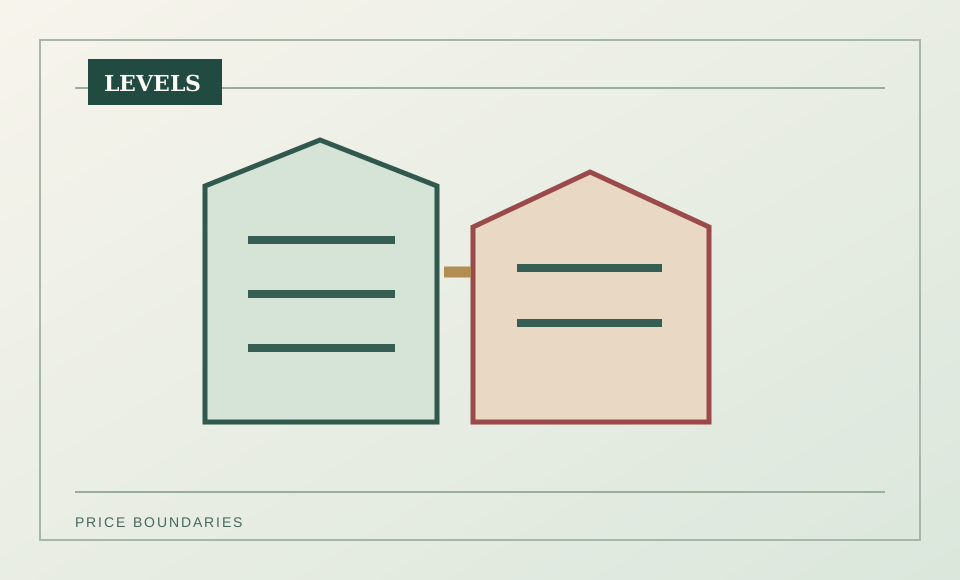
Support and resistance are areas where participants have previously interacted with a price, not invisible walls that compel future reversals. Their utility comes from structured observation and explicit uncertainty.
The underlying mechanism
A horizontal level often marks a previous swing, consolidation range or repeated reaction zone. Traders watch such zones because orders and expectations can cluster around them; however, they can fail without warning, especially near news.
Support and resistance are descriptions of areas where previous market transactions or quotes clustered, not durable physical barriers. Two analysts may choose different zones from the same chart. The concept becomes testable only after the zone width, time frame and reaction rule are specified.
How to evaluate it in practice
Mark zones, not precision-perfect lines. Define in advance what counts as a test, a rejection and a confirmed break. Compare examples on multiple timeframes, and retain failed signals in any sample. Incorporate spreads and slippage.
Rather than drawing a line through successful reversals, record all candidate zones as they become observable. Include failed breaks and periods when price never revisits a zone. Also record if the observation is on bid, ask or traded-price data.
Common mistakes and limits
Drawing levels only after outcomes are visible introduces hindsight bias. The more lines one draws, the easier it becomes to tell a persuasive but untestable story about every movement.
Price touching a support zone does not ensure a resting limit order will fill; order queues and liquidity matter. The SEC investor order guide warns that a limit price does not guarantee execution.
An exercise for careful readers
Create a dated chart log of twenty candidate zones, including the ones price ignores. Evaluate a written definition against the full set rather than only striking examples.
Select a fixed method for detecting zones, archive the levels before the next period, then compare later reaction frequencies with a randomized or simple baseline. Record spread and fees rather than relying on annotated screenshots.
Continue your research
Explore the related topic hub, the risk warning and our editorial standards for additional context. External primary-source references appear below this article.